On 2 August 2026, the EU AI Act's transparency obligations started applying. The clause that touches almost every agency is Article 50: a system that interacts directly with people must make clear they are dealing with an AI, unless that is obvious "from the point of view of a reasonably well-informed, observant and circumspect person." Transparency breaches sit in the Act's second penalty tier — up to €15 million or 3% of worldwide turnover.
"Obvious" is narrower than you'd like
The tempting read is that everyone knows by now. The Commission's read is stricter: the exemption is for cases where there is almost no doubt left about the artificial nature of the interaction. A coding assistant used only by developers might clear that bar. A chat window your client's operations manager opens on a Tuesday does not. Disclosure is expected at the first interaction, in clear language, in every language you serve.
Where the line sits for agency work
Most agency setups are mixed, so apply the test to the interaction, not the tooling:
- An assistant answering a client unattended — that's an AI interacting with a person. Say so.
- A draft an AI wrote that a human read, edited and sent — a person sent that message. Using a model to write it is no more disclosable than using a spellchecker.
- Internal tooling — your board, your summaries, your briefs — isn't an interaction with a client at all.
The design question the law forces is the same one we've argued for on its merits: where the approval line sits. Ambiguity about who sent what was already a liability; now it's a filing.
Clients were asking for this before the regulator did
87% of consumers say businesses should disclose when AI is used in an interaction, and 83% say it matters that a brand's AI identifies itself (AnswerConnect's 2026 CX statistics). Intercom's sentiment research found the two things that most increase comfort with an AI agent are easy escalation to a human and being told upfront it isn't one (The 2026 AI Sentiment Report).
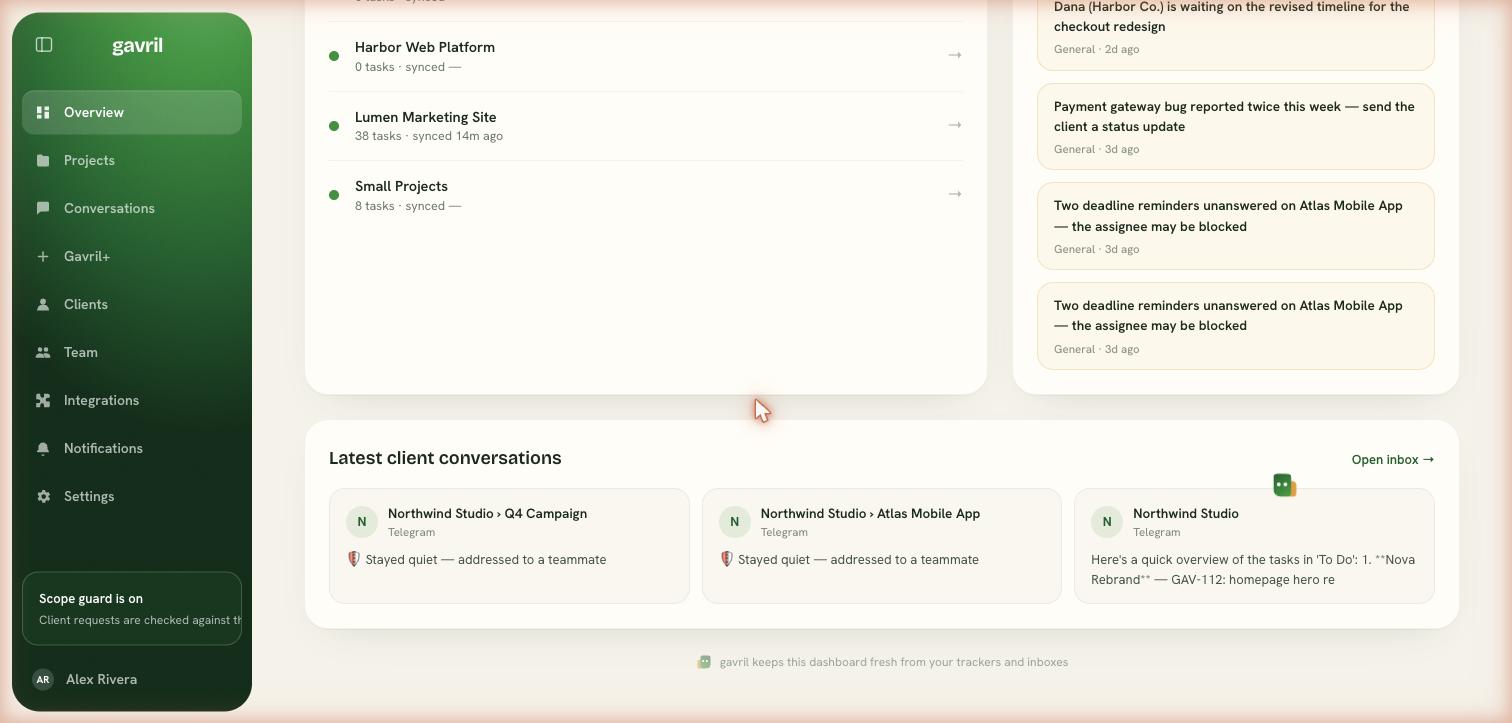
Both of those are architecture, not copy. Gavril discloses what it is, holds anything that needs judgement for a person, and escalates instead of improvising — the same behaviour whether or not a regulator is watching.
This is how we read the rules for our own product, not legal advice — if you operate in the EU, have counsel check your disclosures.
← All posts